

Experience Japanese life in Aisho Town
公開日:2026/01/16 01:21

最新情報
「興味ある」が押されました!
2026/04/28「興味ある」が押されました!
2026/01/18本記事は滋賀県愛荘町そのものや、コミュニティスペース「SekaiCo」の魅力について、外国人の利用者向けに英語で紹介しています。 日本語版の記事をご覧になりたい方は、以下をご確認ください。 https://smout.jp/plans/15981
“I don’t want my time in Japan to end up as ‘just staying here.’” “I want to make friends, connect with local people, and experience everyday life and work a little more deeply.” If that’s you, there’s a perfect base in Aisho Town, Shiga Prefecture.
SekaiCo in Aisho Town is a community space that connects people from overseas with the local community. In this article, we’ll introduce the appeal of SekaiCo and Aisho Town along with reviews from people who have stayed there.
The appeals of SekaiCo
SekaiCo’s owner, Riku Iwanaga, has traveled to more than 20 countries. He describes SekaiCo as a community space built around the concept of “connecting the world from the countryside.”
But what happens at SekaiCo isn’t limited to typical “international exchange events.” Visitors from overseas aren’t treated only as “guests.” Through events and everyday interaction, they naturally connect with local people. SekaiCo is less a place you simply visit, and more an entrance into the rhythms of local life.
Aisho Town, where SekaiCo is located, has three key charms.
First, it has a “just-right” balance that can’t be summed up as simply “rural.” It’s calm and peaceful, yet not so remote that daily necessities feel far away. Even in a new place, it’s easier to build a comfortable routine without overreaching.
Second, there’s a sense of closeness between people. Aisho has an atmosphere where challenges from newcomers are welcomed in a natural, unforced way. Especially when you’re likely to feel anxious or alone in Japan for the first time, this quiet warmth really matters.
Third, it’s a place where experiences rooted in everyday life come more easily than “tourist activities.” Aisho once flourished as a post town on the Nakasendo highway during the Edo period, and it still holds onto local culture such as Omi Jofu textiles and Bin-temari balls. “That’s why experiences here tend to become deeper memories of everyday life.”
Experience Japan with SekaiCo
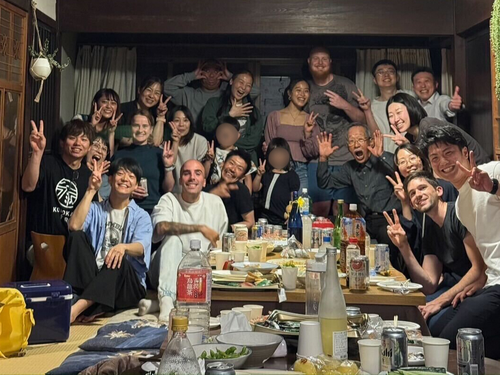
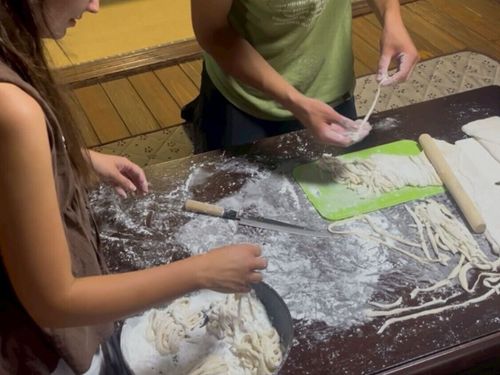
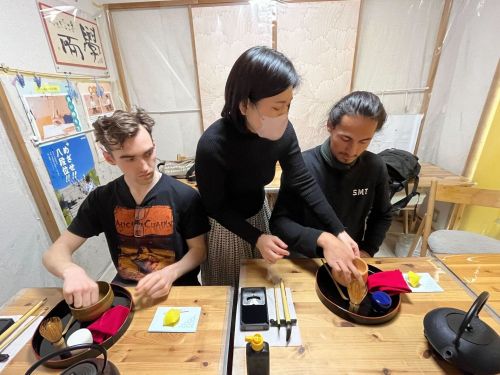
At SekaiCo, people from overseas don’t remain “participants” only—they can also step into the role of helping create the space. For example, during cross-cultural exchange events, guests sometimes become presenters or instructors. People from many countries—such as Italy and Spain—have shared their own cultures, sparking meaningful interaction.
There are opportunities to help local farmers with agricultural work, or assist with event operations at SekaiCo—ways to build relationships by moving and working alongside local people.
The people who gather aren’t only from Aisho Town. Participants also come from outside the town, such as Omihachiman. SekaiCo has become a kind of “exchange hub” where people move across regions.
The important thing is that you don’t have to act like a full “resident” right away. It’s enough to begin by helping out, supporting behind the scenes, or getting involved as “relationship-based participation.” That’s why it’s easier to take the first step, even if you feel uncertain about the language or the area.
For example, Edward, who stayed at SekaiCo, joined a local shrine festival. While helping with the sales booth, he became friends with local people, made shaved ice together, and learned how to pray at the shrine.
It wasn’t like a tourist activity—it was a day where he blended in as part of the community. The beauty of staying at SekaiCo is that these moments happen not as rare “special plans,” but as part of daily life.
Use SekaiCo with confidence
The challenges of a first-time visit to Japan can be language, cultural differences, and a lack of people to talk to. At SekaiCo, we've created an environment where you won't have to deal with these issues alone.
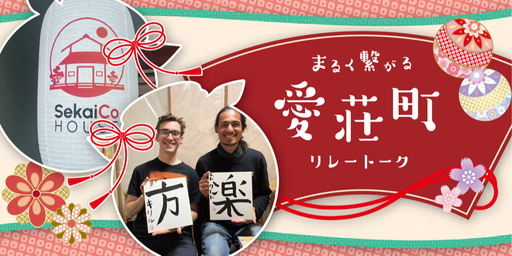
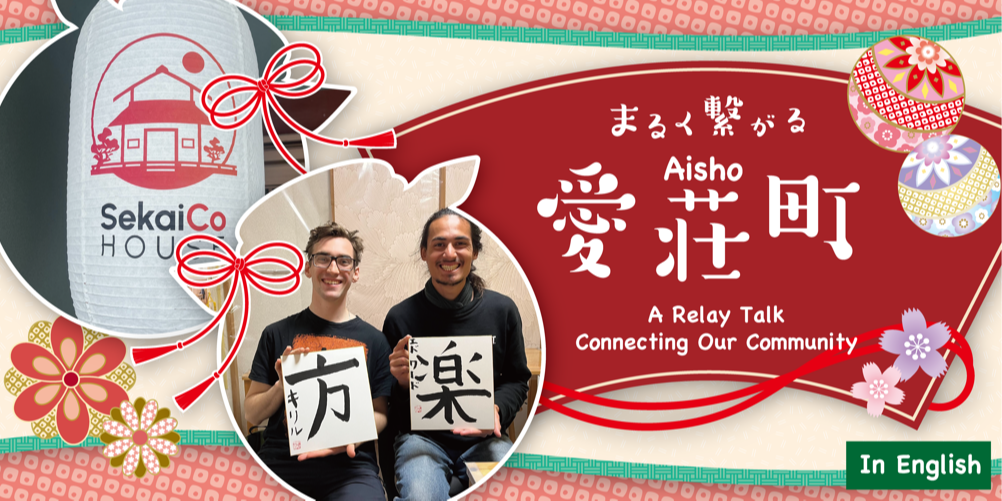
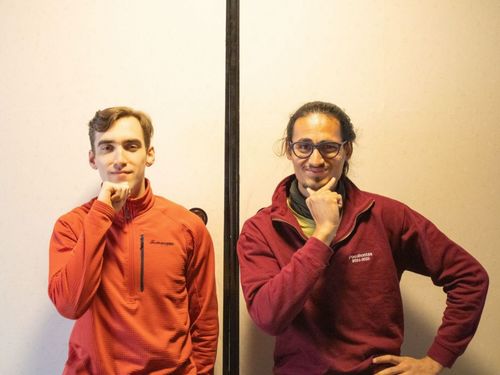
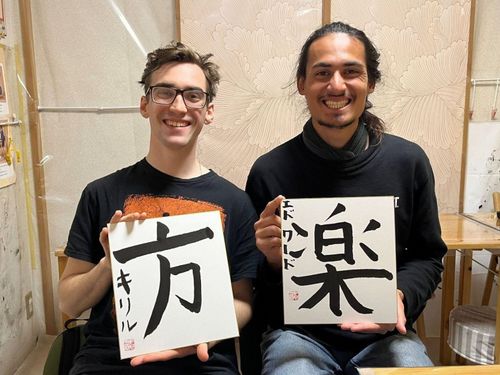
▼Review from Kiril (New Zealand) Since coming to Aisho Town, my world has expanded a lot. Before coming here, I often stayed inside my small world. In Aisho Town, there are many environments where you can challenge yourself and try what you want to do. So I started thinking, “Let’s go see it—let’s try it.” Maybe I felt that way because Aisho has supportive relationships between people, and a relaxed atmosphere.
▼Review from Edward (France) I originally planned to stay at SekaiCo for two weeks, but after learning about Japanese language lessons and opportunities to interact with local people, I extended my stay to four months. The language, culture, and manners are completely different in Japan, but I find these differences fascinating. Riku's support is also invaluable, and I often call him for advice if I have any concerns.
If reading this made you want to learn more about SekaiCo, please check the link below: https://sekaico.com/
We also interviewed SekaiCo’s owner, Riku Iwanaga, about his vision and activities: https://smout.jp/plans/15981
We interviewed Kiril and Edward, who are actually staying at SekaiCo: https://smout.jp/plans/26162
このプロジェクトの地域
愛荘町
人口 2.14万人
愛荘町役場が紹介する愛荘町ってこんなところ!
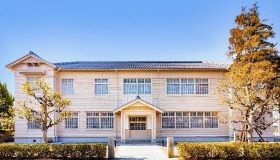
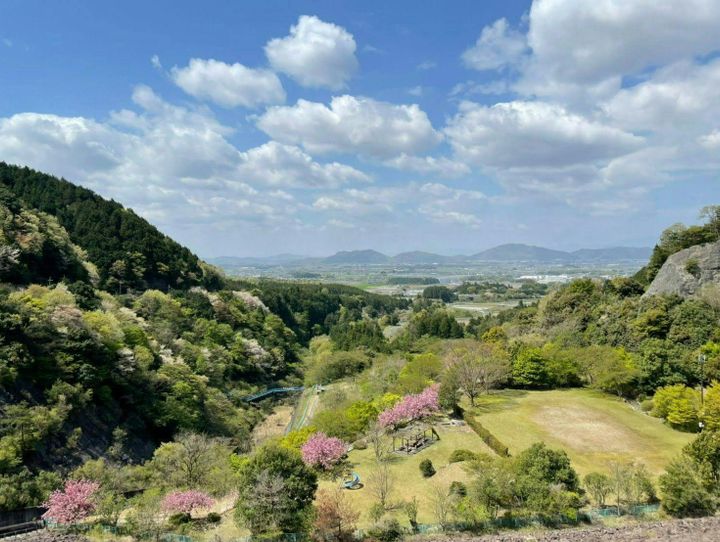
愛荘町役場が紹介する愛荘町ってこんなところ! 平成18年に2つの町が合併してできた現在の愛荘町は、今年で20年目を迎えます。琵琶湖に流れる川の上流・湖東地域に位置しており、鈴鹿山系からの豊かな清水と自然に恵まれ、古くから水との関わりが深いまちとして発展してきました。
町の東側には、聖武天皇の勅願で行基が開山した湖東三山の一つである金剛輪寺があります。昔から四季折々の雰囲気を楽しめるスポットとして地元の方々をはじめ多くの人に愛され続けている場所です。また、近世には中山道66番目の宿場として愛知川宿が栄え、後の明治には郡役所や警察などの官公署が置かれ、近江鉄道が開通するなど、古くから地方の中心としても栄えてきました。
国の伝統的工芸品に指定されている「近江上布」を中心とした麻織物や、瓶のなかにてまりが入った不思議で美しい滋賀県の伝統的工芸品「愛知川びん細工手まり」など、愛荘町でしか見られない手仕事ならではの「ワザ」が光る工芸品を見られるのも特徴です。